 Refrigerators
 Dryers
 Dishwashers
 Stoves
 Freezers
Why does food heated in a microwave become dry and hard?

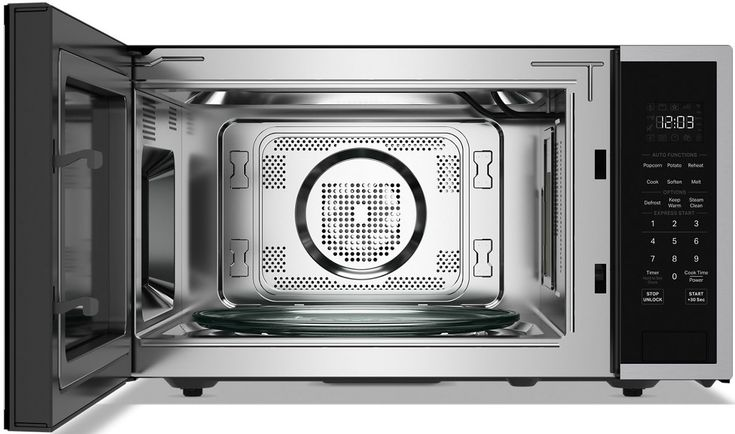
Creating a cozy summer home that serves as a peaceful retreat requires careful selection of appliances that enhance comfort without compromising on style or efficiency. At Appliances 4 Less Little Rock, we cater to residents in Little Rock, Benton, Conway, and Pine Bluff with an array of open box, scratch, and dented appliances that are perfect for elevating your summer living. Here’s our guide to the essential appliances for a cozy summer home.
In daily cooking, we often encounter such confusion: obviously are heating food, why steamed snacks are always soft and moist, while microwave heated meals often become dry and hard to chew? In fact, there are completely different physics principles behind this. This article will start from the principle of heating, explore the root causes of changes in food taste, and share a few practical microwave oven tips to help you better retain the delicious taste of food in your daily life.
(1)、The basic principle of microwave heating
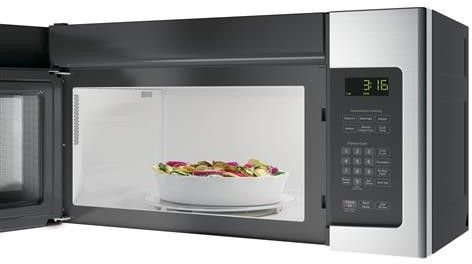
To explain the dry and hard phenomenon of microwave oven heating food, we must first understand the principle of microwave oven heating.The heating method of microwave oven is very different from that of traditional kitchenware.
The traditional steamer gradually transfers heat from the surface of the food to the inside by heat conduction. The core component of the microwave oven, the magnetron, emits 1 electromagnetic waves (microwaves) of a specific frequency. After these microwaves penetrate the food, they mainly act on the water molecules, fat and carbohydrate molecules inside the food. Due to the polarity of water molecules, they are rapidly rotated at extremely high frequencies (billions of times per second) and try to align with the direction of the electric field under the action of 1 alternating electromagnetic fields such as microwaves. This high-frequency molecular motion causes intense friction between molecules, and the heat generated by friction constitutes a heat source for heating food.
Therefore, the essence of microwave heating is to make the water molecules inside the food itself generate heat through high-frequency vibration, so as to realize the overall heating from the inside out.
(2)、Reasons
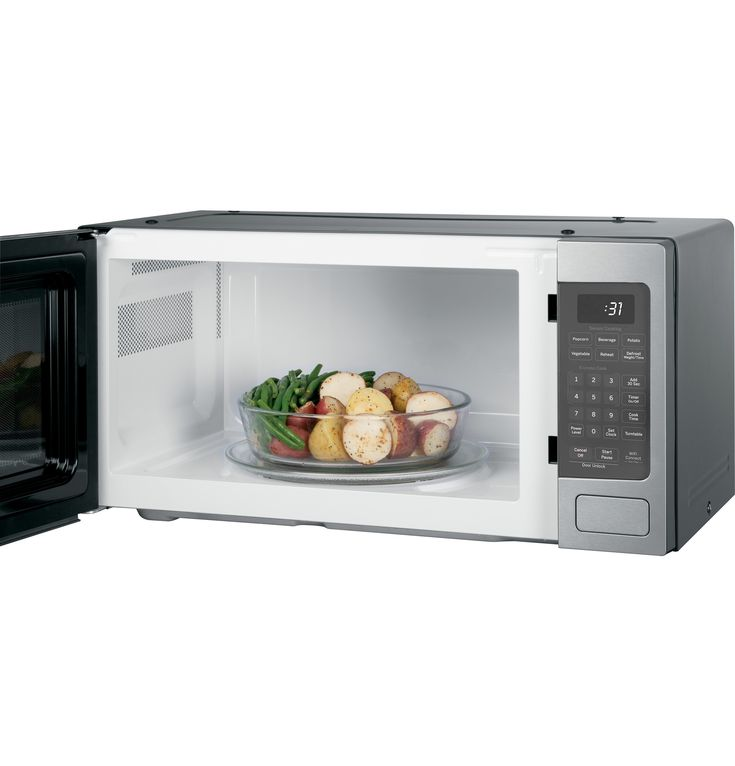
Understand the heating principle of the microwave oven, the dry and hard phenomenon of the food after heating is not difficult to understand, the main reasons are the following 3:
1. a large amount of water evaporation and loss
The efficiency of microwave heating is extremely high, which can make the water inside the food reach the boiling point in a short time. These high temperature water vapor will generate internal pressure, and quickly spread to the surface of the food and escape, and eventually lost in the furnace environment. When the heating time is too long or the power is too high, the water inside the food is extracted a lot, and its microstructure collapses or shrinks due to the loss of the support of water molecules, which causes the food to become dry and hard.
2. recrystallization of starch structure
For starch-rich foods, stiffening also involves a change in the physical state of the starch. Freshly made starchy food is in a state of gelatinization, starch molecules combined with water to form a relatively loose gel structure, soft taste. When food is heated by microwave and a large amount of water is lost, as the temperature changes, the originally disordered starch molecules will rearrange to form an ordered crystalline structure. This 1 process is known as starch retrogradation or aging. Once this structural change occurs, the food will take on a dry and hard state.
3. hot spot effect leads to uneven heating
The distribution of microwaves in the oven cavity is not always completely uniform, which can cause food to heat up quickly (becoming a “hot spot”) in some places and slowly in others. Hot spots of water will be excessive evaporation, forming a dry hard pimple, and cold spots may still be cold. This uneven heating also caused the food to become dry and hard, and destroy the overall taste of the food.
(3)、Practical methods to improve the taste of food
Knowing the reason, the solution is clear. Here are some simple and practical tips:
1. create a local humidified environment
①. Cover or cling film
Cover the heated container with a lid or microwave wrap, leaving a small seam to breathe. This can lock the water vapor evaporated from the food, forming a hot and humid environment in the container and moistening the surface of the food.
②. Add a few drops of water
Before heating steamed bread, rice, bread and other pasta, you can spray a few drops of water on the surface of the food, or pour a small amount of water at the bottom of the bowl to generate more steam during the heating process.
2. use the special cover for microwave oven
Special cover or plastic wrap for microwave oven (remember to make a few small holes for ventilation) can lock the evaporated water of food itself, form a local humid environment and reduce water loss.
3. control heating time and power
Using the strategy of “medium and high power + short time”, we would rather heat it several times than heat it for too long. Take out the food and stir it in the middle of heating, which can not only heat the food evenly, but also avoid excessive water loss caused by local overheating.
4. food placement skills
①. Circular pendulum method
Place the food into a ring along the edge of the dinner plate, leaving a large gap in the middle, so that the microwave can penetrate evenly from all angles, and avoid the dehydration and dryness of the central part due to excessive microwave aggregation.
②. Dividing and placing large pieces of food
For larger food, it should be cut into small pieces and scattered, leaving a gap between the pieces to increase the heating area while preventing the internal water loss due to long heating time.
5. different foods are heated separately
Meals are split open because the ideal heating time for rice and dishes is different. Dishes usually take shorter time, and heating separately can avoid excessive heating causing dryness and hardness.
6. use heat-resistant paper or wet tissue
Use a slightly soaked kitchen paper towel or heat-resistant baking paper to wrap the food. The moisture generated by the heat of the paper towel will continue to add to the surface of the food to prevent it from losing moisture due to direct heat.
Conclusion
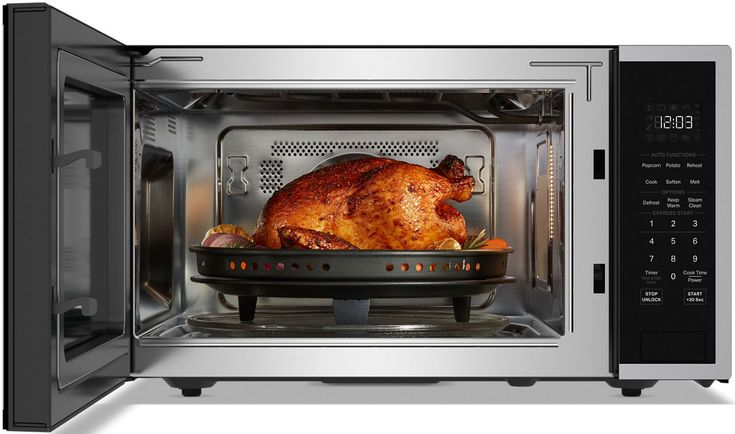
In fact, the problem of dry food caused by microwave heating is not without solution. By understanding its working principle, we can take targeted improvement measures. Local humidification, controlled heat, separate heating-these seemingly small adjustments can significantly change the final taste of food. I hope the practical skills in this article can help you enjoy the high efficiency and convenience of microwave oven, and at the same time, you can easily keep the softness and deliciousness of food, so that every 1 meal can return to the ideal state.


